
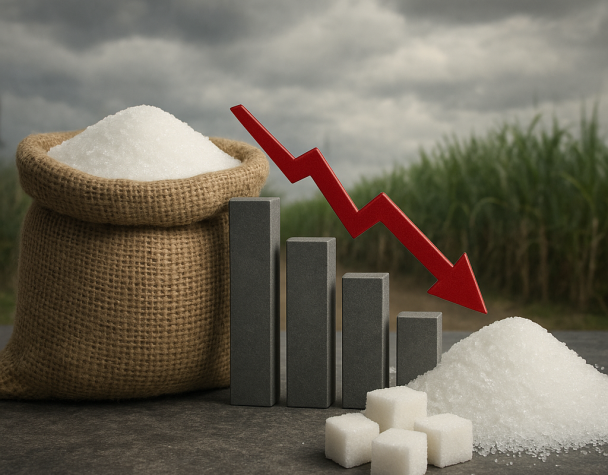
Global Sugar Market Faces Downward Pressure Amid Surplus and Weak Demand
Tue, July 07, 2026Global Sugar Market Faces Downward Pressure Amid Surplus and Weak Demand
In recent weeks, the global sugar market has experienced a notable decline in prices, primarily driven by an oversupply and diminished demand from key importers. As of July 6, 2026, raw sugar futures on the ICE exchange have stabilized around 14 cents per pound, reflecting the market’s response to these prevailing conditions.
Impact of U.S.-Iran Agreement on Energy Prices
A significant development influencing the sugar market was the recent agreement between the United States and Iran to end their conflict and reopen the Strait of Hormuz. This accord led to a sharp decline in energy prices, which, in turn, affected sugar markets by making it more economically viable for cane mills to increase sugar production over ethanol output. Consequently, raw sugar futures dropped to 13.61 cents per pound, marking their lowest point since late April. By June 15, the contract had slightly recovered to 13.72 cents.
Decline in Chinese Sugar Imports
Adding to the downward pressure, China, the world’s largest sugar importer, reported a 36.8% decrease in sugar imports in May compared to the same month the previous year. This significant drop in demand has further contributed to the oversupply in the global market, exacerbating the decline in sugar prices.
Weather Conditions in Brazil’s Center-South Region
In Brazil, the top sugar-producing country, forecasts indicate above-normal rainfall in the Center-South region. While this could potentially slow cane harvesting and slightly reduce sugar quality, the overall impact on global supply is expected to be minimal. The market continues to grapple with ample supply, keeping prices under pressure.
Market Outlook
The combination of a global surplus, reduced demand from major importers like China, and favorable weather conditions in key producing regions suggests that sugar prices may remain subdued in the near term. Market participants are closely monitoring these developments, as any shifts in production or demand could influence future price movements.
In summary, the global sugar market is currently characterized by an oversupply and weakened demand, leading to stabilized but low prices. Stakeholders should remain vigilant to potential changes in geopolitical events, weather patterns, and import trends that could impact the market dynamics moving forward.