
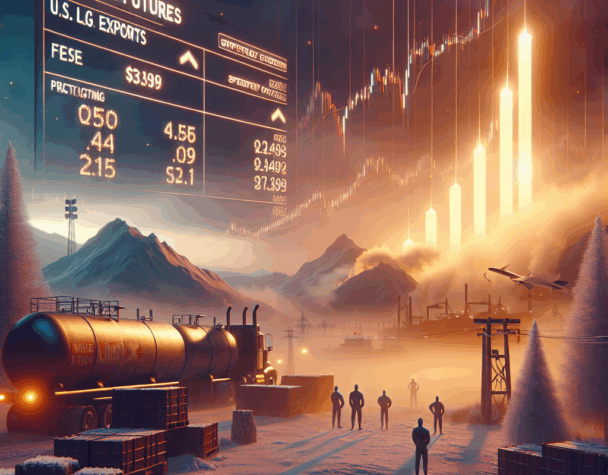
U.S. LNG Surge Pressures Gas Supply; Prices Jump!!
Wed, November 12, 2025U.S. LNG Surge Pressures Gas Supply; Prices Jump!!
Introduction
Over the past week, headline-driven flows in the U.S. natural gas complex have shifted from steady to sharply bullish. Record outbound LNG shipments coupled with colder early-winter forecasts tightened physical balances, nudging Henry Hub futures above the $4.30/MMBtu area. At the same time, storage builds that technically beat expectations remain modest relative to longer-term norms, and speculative positioning has amplified short-term volatility. For energy investors, the interaction between export-led demand and seasonal draws is now the primary pricing engine.
What moved prices this week
Record U.S. LNG exports drained domestic supply
U.S. liquefied natural gas (LNG) terminals ran near record throughput levels in early November, with outbound flows averaging at historic highs across major facilities. Those shipments convert U.S. gas into a globally traded fuel, effectively exporting domestic supply and tightening what’s left for U.S. consumption and storage. Even with production near or above 100 Bcf/d, the net effect has been a visible draw on available volumes for power generation and heating during the ramp-up to winter.
Weather and storage: supportive but vulnerable
Short-term weather models shifted colder, prompting higher heating demand forecasts. The Energy Information Administration’s latest weekly report showed a modest storage build (around the low‑to‑mid 30s Bcf for the week ending Oct. 31) — slightly above some expectations but still below the five-year typical pace in cumulative terms. Inventories sit only a few percent above seasonal norms, so downside weather surprises can quickly flip balances tighter.
Market structure and risk signals
Speculative positioning and volatility
Futures contracts have rallied nearly 20–30% over recent weeks, attracting speculative longs and lifting implied volatility. Open interest and long positions have increased noticeably in near‑term winter contracts, raising the risk of abrupt corrections if weather warms or a supply disruption reverses. For traders this means wider bid‑ask spreads and faster intraday moves — for investors it suggests a need for defensive sizing and hedging.
Infrastructure and regional supply shifts
Regulatory developments matter more in tight markets. New York’s recent conditional approval of the Northeast Supply Enhancement (NESE) pipeline signals a potential relief valve for the Northeast if it clears remaining approvals. However, permitting delays and legal challenges remain possible, keeping regional price spreads a source of localized volatility. A pipeline that reaches consumers before peak winter could materially reduce price risk in the Northeast; if it’s delayed, that region could face higher-than-average winter prices.
What this means for investors
Short-term tactics
– Hedge exposure to winter price spikes: consider collars or protective puts if you hold physical or equity exposure tied to Henry Hub.
– Favor LNG-linked names in the near term: firms with export capacity or fee-based cashflows can benefit from sustained export strength.
– Monitor weather model divergence: large flips in 10–14 day ensembles commonly trigger fast price reversals.
Medium-term considerations
While current fundamentals are supply-tight, medium‑term dynamics could ease pressures. The International Energy Agency and industry project a sizeable build-out of global LNG capacity toward 2030. That expansion may relieve some export-driven tightness over several years, implying that winners in the near term (exporters, midstream fee generators) could face margin compression as global supply grows. Investors should balance exposure to near-term cashflow strength against longer-term capacity additions.
Practical example: a hedged approach
Imagine an investor who owns shares in an LNG-exporting midstream company and worries about a post-winter price correction. A practical hedge would be to buy put options on a Henry Hub futures equivalent or to sell short-term call spreads on the equity to offset downside while preserving some upside if prices climb further. This preserves upside participation during a tight winter but limits losses if a warm spell triggers a rapid decline.
Conclusion
Over the past week, the U.S. gas complex tightened as record LNG exports and a colder short‑term weather outlook pushed futures higher and increased volatility. Weekly storage additions were modest relative to seasonal norms, leaving inventories vulnerable to sustained draws. Speculative length has amplified short-term risk, while regional pipeline approvals like NESE could, if realized, ease localized supply pressures. For investors, the tradeoff today is clear: near‑term upside driven by export demand and weather contrasts with medium‑term supply growth that could blunt returns. Tactical hedging, active weather monitoring, and selective exposure to fee‑based export players offer a balanced path through heightened winter uncertainty.