
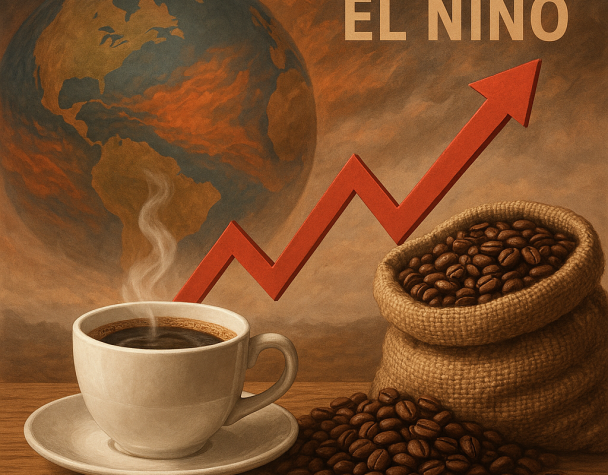
Prolonged Coffee Price Increases Expected as El Niño Disrupts Global Supply
Sun, July 26, 2026El Niño’s Impact on Coffee Prices: A Two-Year Outlook
Global coffee prices are projected to remain elevated for at least two years due to the disruptive effects of the El Niño weather phenomenon on major coffee-producing regions. This development poses challenges for both producers and consumers worldwide.
El Niño’s Disruption of Coffee Production
El Niño, characterized by the periodic warming of sea surface temperatures in the central and eastern Pacific Ocean, has historically led to significant climatic changes, including altered rainfall patterns and increased temperatures. These changes adversely affect agricultural outputs, particularly in coffee-growing regions.
In Brazil, the world’s largest coffee producer, El Niño has resulted in irregular rainfall and prolonged droughts, severely impacting coffee yields. Similarly, Vietnam, the second-largest producer, has faced unseasonal weather patterns leading to reduced harvests. These disruptions have tightened global coffee supplies, contributing to sustained high prices.
Market Response and Price Projections
The coffee market has responded to these supply constraints with increased volatility. According to industry experts, the market requires stability before considering any reduction in prices. The chairman of Italian coffee roaster Luigi Lavazza SpA emphasized the need for market equilibrium, stating that price reductions are contingent upon stabilized conditions.
Analysts predict that the lingering effects of El Niño will keep coffee prices elevated for at least the next two years. This projection is based on the anticipated prolonged impact of adverse weather conditions on coffee production and the time required for affected regions to recover and restore normal yield levels.
Implications for Consumers and the Industry
For consumers, sustained high coffee prices may lead to increased retail costs, affecting daily consumption habits. The United Nations Food and Agriculture Organization (FAO) reports that raw coffee price shocks typically take about a year to fully impact consumer prices, with residual effects lasting at least four years. This means that the current supply disruptions could have long-term implications for coffee affordability.
The coffee industry faces the challenge of navigating these price fluctuations while maintaining consumer demand. Producers and retailers may need to explore strategies such as diversifying supply sources, investing in climate-resilient farming practices, and implementing efficient supply chain management to mitigate the impact of future climatic events.
Conclusion
The ongoing El Niño phenomenon has significantly disrupted coffee production in key regions, leading to a projected two-year period of elevated prices. This situation underscores the vulnerability of global agricultural markets to climatic events and highlights the need for adaptive strategies within the coffee industry to ensure stability and sustainability in the face of environmental challenges.