
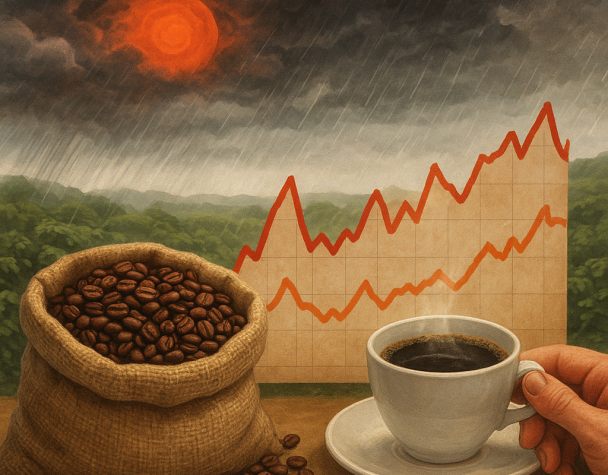
El Niño's Impact on Coffee Prices: A Two-Year Outlook
Sun, July 12, 2026El Niño’s Impact on Coffee Prices: A Two-Year Outlook
Introduction
The global coffee market is experiencing significant volatility, with prices expected to remain elevated for at least the next two years. This trend is largely attributed to the ongoing effects of the El Niño weather phenomenon, which has disrupted coffee production in key growing regions.
El Niño’s Influence on Coffee Production
El Niño, characterized by warmer-than-average sea surface temperatures in the Pacific Ocean, has led to unpredictable weather patterns, including droughts and excessive rainfall. These conditions have adversely affected coffee yields in major producing countries such as Brazil and Vietnam. According to the Los Angeles Times, global coffee prices are expected to stay elevated for at least two years as volatile markets and tight inventories keep relief out of reach for consumers.
Market Response and Price Trends
The disruption in supply has led to a tightening of inventories, contributing to sustained high prices. As of July 10, 2026, the price of Arabica coffee futures stood at $10.91 per pound, reflecting a 0.27% decrease from the previous day. Despite this slight dip, prices remain significantly higher than historical averages.
Industry Perspectives
Industry leaders are closely monitoring the situation. Giuseppe Lavazza, chairman of Luigi Lavazza SpA, emphasized the need for market stability before considering price reductions. He stated, “The market needs to have stability before it’s time to think about a reduction of prices.”
Consumer Impact
For consumers, the prolonged period of high coffee prices means that their daily cup of coffee will continue to be more expensive. Retail prices have surged, with the average price of ground roast coffee reaching $9.46 per pound in February 2026, marking a 31% increase from the previous year.
Conclusion
The coffee industry is facing a challenging period as the effects of El Niño continue to disrupt production and supply chains. With prices expected to remain high for the foreseeable future, both producers and consumers will need to adapt to this new market reality. Monitoring weather patterns and implementing strategies to mitigate their impact will be crucial for stabilizing the market in the coming years.