
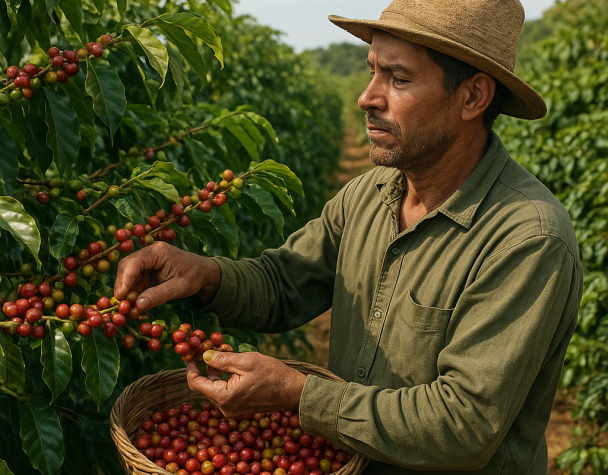
Brazil’s Arabica Harvest Nears Finish but Lags Last Year, Quality Concerns Rise
Sat, September 26, 2026The 2026/27 arabica coffee harvest in Brazil is approaching completion, yet harvest progress remains behind last year’s levels, fueling concern over crop quality and market timing. Recent export and origin data point to tangible supply-side implications in the near term.
Harvest Progress and Quality Challenges
As of late August, the arabica harvest in Brazil was nearing completion in most producing regions, supported by dry weather that accelerated picking, according to Brazil’s Center for Advanced Studies on Applied Economics (Cepea) as of September 1, 2026. For instance, southern Minas Gerais had reached approximately 90% harvested, up from 65% at the beginning of the month; the Cerrado Mineiro region stood between 85% and 90%, compared with just 50% earlier; and Zona da Mata was the most advanced, with about 97% completed. Yet overall, the pace still trails that of 2025 and is expected to yield a crop with poor cup quality and elevated defects.
In the Cerrado Mineiro region specifically, the harvest entered its final stretch. As of early September, 96% of the estimated area had been harvested, with 83% of those beans already processed. The region reported strong processing yield—one of the best in recent years—although it remained slightly behind 2025 figures.
Export Flows Remain Strong
Export momentum continued into September, driven by August volumes. Between September 1 and 11, Brazil issued exporter certificates of origin totaling 983,918 for arabica, up from 815,872 during the same period in August. Conilon (robusta) volumes also rose from 246,803 to 274,018, signaling robust outflows even as the harvest nears its end. Meanwhile, speculative positioning in coffee futures markets has been pared back, though substantial non-commercial length remains open.
Market Implications
Despite nearing harvest completion, the delayed pace relative to last year and expected inferior crop quality may restrain export volumes and influence arrival timing in global markets. The uptick in current export activity could partially offset these pressures, but cumulative yield concerns and later deliveries may weigh on price responsiveness, especially amid already elevated inventory drawdowns.
Moving forward, traders and investors should monitor final yield confirmations, bean grading outcomes, and shipping delays to assess how these developments might alter pricing backdrops. Given that Brazil is the world’s largest arabica producer, even modest disruptions or quality issues can materially ripple into global supply metrics and market sentiment.
Sources: Data on harvest progress and quality from Cepea (September 1, 2026); export certificate volumes and market commentary from StoneX’s Daily Coffee Report (September 14, 2026).