
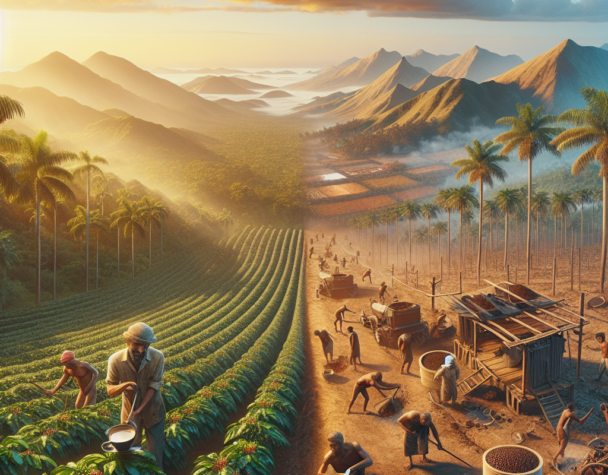
Brazil Robusta Rally and India Labor Squeeze 2025!
Wed, December 10, 2025Introduction
Late‑year coffee headlines have produced a concentrated set of price drivers: Brazil’s robusta is being upgraded and commanding unusually high premiums, while improving Brazilian export prospects and raised production forecasts have pressured futures. Simultaneously, labour shortages and climbing costs in India’s coffee regions introduce a fresh supply risk. These concrete events — not vague narratives — are moving prices and creating tactical opportunities for commodity players and supply‑chain participants.
Why Brazil’s Robusta Is Suddenly Valuable
Quality Premiums and Grower Shifts
Producers in Espírito Santo and other Brazilian robusta centers have invested in better harvest and post‑harvest practices, transforming part of their output into specialty‑grade robusta. That premiumization has pushed specialty robusta prices to roughly $295 per 60‑kg bag, a notable uplift from prior years. For roasters and traders seeking consistent cup quality at lower arabica availability, specialty robusta offers an attractive alternative.
Structural and Climatic Forces
Climate stress is reducing reliable arabica zones in some parts of Brazil, nudging producers toward the more resilient robusta. This structural shift isn’t instantaneous but can accelerate if premium spreads persist. Think of it as crop rotation on a regional scale: when one variety becomes riskier, capital and labour reallocate to the resilient alternative — and the market compensates via price.
Futures Reaction, Inventories and Forecasts
Short‑Term Price Moves
On December 5, arabica futures fell roughly 1.5% and robusta dipped modestly, driven by a combination of factors that improved near‑term supply expectations. Brazil’s currency weakness versus the U.S. dollar improved export competitiveness, and Brazil’s national supply agency raised its coffee output projection to around 56.54 million bags. Vietnam’s export outlook for robusta also pointed to healthier shipments ahead.
Inventory Signals and Offsetting Risks
Despite downward pressure from revised forecasts, structural tightness remains. Registered ICE arabica stocks sat at approximately 426,500 bags, while robusta exchange inventories have been near multi‑month lows. Those inventory constraints act like a spring: they limit downside and leave the market sensitive to further weather shocks or logistical hiccups.
India’s Labor Crunch: A Growing Cost Shock
On‑the‑Ground Dynamics
In Karnataka’s coffee districts, acute labour shortages and rising wage demands are squeezing estate margins. Contractors and intermediaries are capturing a significant share of higher rates, and unseasonal rains are complicating harvest operations. Even with strong price realizations, growers warn that a pullback in prices could quickly make operations uneconomic.
Market Implications
India is an important robusta origin for specific blends and instant coffee supply. If labour constraints reduce output or quality, supply tightness could emerge at the margin — particularly for grades that feed the soluble and industrial sectors. For buyers, this elevates counterparty and sourcing risk; for investors, it shifts the balance toward regional supply monitoring.
Conclusion
Recent, concrete developments are creating a nuanced price environment: Brazil’s robusta premiumization supports certain price bands even as production upgrades and currency moves exert downward pressure on futures. Meanwhile, India’s labour and cost pressures pose a credible supply risk that could tighten availability for specific robusta grades. Market participants should prioritize tracking specialty robusta premiums, Conab production updates, exchange inventories, and on‑the‑ground harvest conditions in India and Brazil to navigate the coming weeks.