
Brazil Record Crop Pushes Coffee Prices Down
Wed, April 08, 2026Introduction
This week’s coffee price action has been dominated by two powerful, opposing forces: a much larger-than-expected Brazilian crop that triggered steep selling, and a geopolitical shipping shock that prevented prices from collapsing further. Traders, roasters and supply-chain managers are recalibrating positions quickly as physical and financial markets react to new supply data and heightened transport risk.
Why Prices Fell: The Brazilian Supply Surge
Record harvest figures
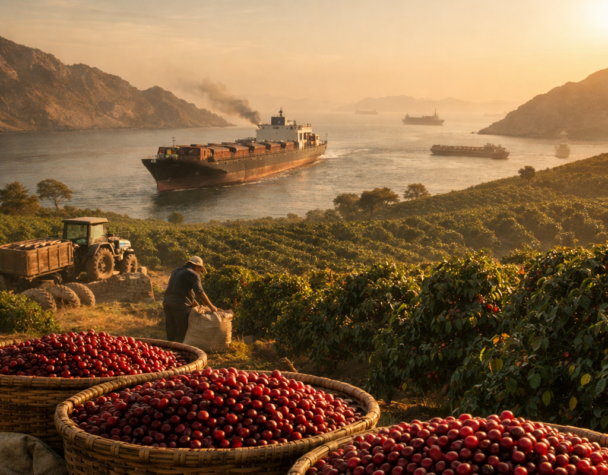
Brazil’s official supply estimates for 2026 showed a dramatic increase in output. The country’s harvest is now projected at roughly 66.2 million 60-kg bags—a year-on-year gain near 17%—with Arabica production alone up around 23%. Those numbers transformed the outlook from tight-to-balanced into a clear near-term supply surplus, prompting large-scale selling across futures markets.
Immediate market impact
Futures reacted fast: Arabica prices retraced to levels near $2.80 per pound, one of the lowest points since mid-2025. The speed and scale of the move were magnified by heavy liquidation from speculators. Reported outflows of long positions exceeded $2.7 billion across agricultural contracts, intensifying downward momentum as leveraged positions were unwound.
What Kept a Floor Under the Drop: Shipping Disruption in Hormuz
Logistics risk bites back
Concurrently, a closure-related disruption in the Strait of Hormuz elevated freight costs and transit times for coffee shipments, particularly affecting routes from parts of Asia and the Middle East. That news acted as a short-term bullish counterweight: on report flows, nearby Arabica futures spiked more than 7% intraday, signalling markets still price in non-supply risks.
Why logistics matter
Even when physical supply looks abundant on paper, elevated transit risk can produce real, immediate tightness at destination hubs. Higher freight and insurance costs, delayed vessels and rerouted cargoes increase landed costs and create temporary bottlenecks, which limit how far prices can fall despite ample crops.
Structural Factors Still Driving Volatility
Inventory distribution and Robusta tightness
Global figures mask regional imbalances: some Robusta inventory pools remain lean, and storage at key roasting and processing centers has not fully absorbed the new arrivals. That uneven distribution contributes to price sensitivity: small disruptions or a shift in demand can pass through to the front months rapidly.
Hedging lags for roasters and consumers
Lower futures have not yet translated into immediate cost relief for roasters and retail channels. Many contracts are hedged weeks or months ahead, and logistic backlogs create lagged pass-through. That means consumer prices and contracted supply costs may stay elevated even as benchmark futures fall.
Actionable Takeaways for Traders, Roasters and Farmers
For traders
- Expect continued volatility: the combination of a large fundamental crop and episodic logistics shocks creates frequent re-pricing opportunities.
- Use position sizing and stop rules: speculative liquidation has been rapid; risk controls are essential to avoid forced exits in sharp moves.
For roasters and buyers
- Layered hedging remains prudent: locking a portion of forward requirements can protect margins while allowing participation if prices fall further.
- Monitor freight and insurance: logistics-driven cost swings can offset commodity price gains—managing transport exposure is as important as coffee hedges.
For producers
- Verify on-the-ground estimates: some growers challenge the magnitude of official forecasts—accurate farm-level reporting helps inform better pricing and selling decisions.
- Prepare for price swings: market signals indicate a two-way risk environment where weather, shipping or demand surprises can cause rapid reversals.
Conclusion
The latest developments show a market in transition. Brazil’s surprisingly large 2026 crop has set a bearish tone, triggering heavy speculative selling and pushing Arabica prices lower. However, logistics disruption through the Strait of Hormuz has provided intermittent support by raising short-term delivery risk and costs. For stakeholders across the value chain—traders, roasters and producers—the environment demands nimble risk management: hedging, close monitoring of freight dynamics and verification of production data will determine who benefits from the next leg of price discovery.