
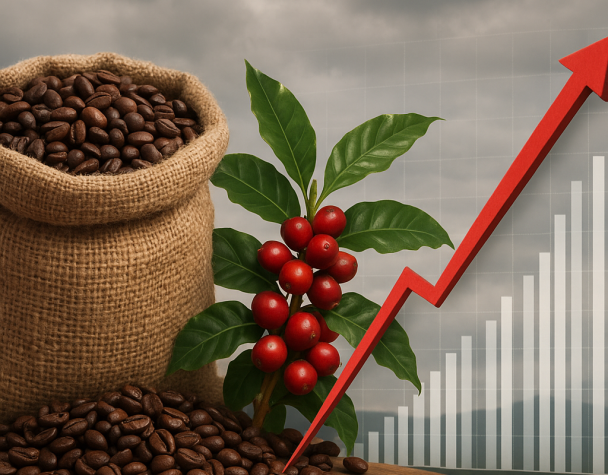
Arabica Futures Spike Amid Ultra-Low ICE Stocks and El Niño Concerns; Robusta Faces Pressure from Rising Inventories
Wed, October 28, 2026Coffee markets witnessed pronounced divergence over the past week, driven by a combination of supply tightness in arabica and increasing inventories weighing on robusta.
Arabica shorts bounce as stock scarcity fuels rally
ICE December arabica futures vaulted to approximately 315.70 cents per pound on October 19, marking a one-month high and a gain of about 3.3% in a single session, driven in large part by depleted certified stocks at the exchange and renewed El Niño concerns. These inventory levels reached multi-decade lows, nearing figures not seen since the late 1990s.
Traders later scaled back gains, with futures easing to around 307–309 cents by the week’s close, maintaining a net 1–1.5% weekly gain. Despite the pullback, prices remained firmly above $3 per pound, underscoring the tight supply narrative.
Market commentary suggests much of the rally stemmed from short-covering rather than an immediate supply shock, as a surge of more than 28,000 bags appeared pending grading—indicating holders may be releasing coffee into the market amid high prices.
Robusta dips as London stocks swell
In contrast, London robusta January futures declined amid a spike in exchange-certified inventories to the highest levels in over a year. The rising supply landscape, particularly in Vietnam, weighed on sentiment and constrained price momentum.
Weather pivots deepen the divergence
Weather signals provided further nuance: while Vietnam faces potential drought threats tied to El Niño developments, Brazil’s arabica regions received well above-average rainfall—a factor that may support flowering and the 2026–27 harvest shift. This divergence underscores the uneven impact of climate patterns across the coffee belt.
What it means for consumers and roasters
Supply tightness and elevated futures prompted some roasters, including JM Smucker, to defer planned retail coffee price cuts, signaling that higher green-bean costs are being passed through rather than absorbed.
Looking ahead
Fresh data on ICE-certified stocks, grading results, and early crop reports from Brazil and Vietnam will be critical in determining whether the arabica rally continues or fades. In contrast, robusta may remain under pressure unless stock levels begin to normalize or demand dynamics shift.