
US Corn Market Faces Volatility Amid Global Events and Domestic Factors
Tue, July 07, 2026US Corn Market Faces Volatility Amid Global Events and Domestic Factors
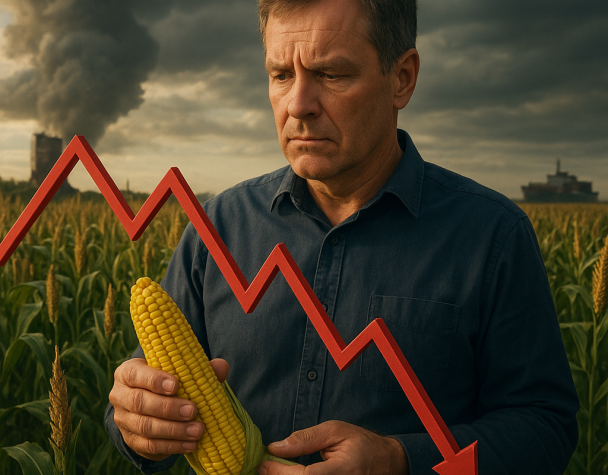
The US corn market is experiencing significant volatility due to a combination of global conflicts, domestic demand shifts, and weather conditions. These factors are influencing corn prices and the broader agricultural economy.
Impact of the 2026 Iran Conflict
In February 2026, coordinated air attacks by the United States and Israel on Iran led to immediate market reactions. The closure of the Strait of Hormuz, a critical passage for global energy and fertilizer shipments, caused oil and fertilizer prices to surge by nearly 50%. This escalation increased production costs for US corn farmers, resulting in an estimated $6 billion loss in revenues and an additional $4 billion in costs. The total economic impact on the US corn supply chain is projected to be around $13 billion, with approximately $10 billion affecting the US gross domestic product. Iowa, a major corn-producing state, is expected to bear 15-20% of these losses. These figures are based on a policy brief from the Center for Agricultural and Rural Development at Iowa State University.
Domestic Demand and Ethanol Production
Despite global challenges, domestic demand for corn remains robust, particularly from the ethanol industry. Ethanol producers are operating at high capacity due to solid margins and strong export demand. This resilience in the ethanol sector provides a cushion against the downward pressure on corn prices caused by favorable weather conditions and expectations of a large harvest. However, the market remains cautious, with investment funds reducing long positions, leading to multi-month lows in corn futures. This information is reported by CMB News.
Weather Conditions and Planting Progress
Favorable weather in the US Corn Belt has accelerated planting and improved crop prospects. The rapid planting pace and solid crop ratings have contributed to a bearish tone in the market, as expectations of a substantial 2026/27 harvest grow. However, the market is also attentive to potential weather-related disruptions that could affect yields. CMB News provides insights into these developments.
Global Trade and Export Demand
US corn exports have shown strength, with significant purchases from countries like Japan and Mexico. This robust export demand has provided some support to corn prices, even as domestic factors exert downward pressure. Additionally, the European Union has slightly reduced its corn production estimates, which could influence global supply dynamics. These developments are highlighted by CMB News.
Market Outlook
As of July 6, 2026, the Teucrium Corn Fund (CORN) is trading at $17.45, reflecting a 0.75% increase. This uptick suggests a cautiously optimistic market sentiment, balancing strong domestic demand and export performance against the backdrop of global conflicts and favorable weather conditions. Investors and stakeholders should closely monitor these evolving factors to make informed decisions in the volatile corn market.
In summary, the US corn market is navigating a complex landscape shaped by international conflicts, domestic demand fluctuations, and weather patterns. While certain factors provide support to prices, others contribute to volatility, necessitating vigilant monitoring and strategic planning by market participants.