
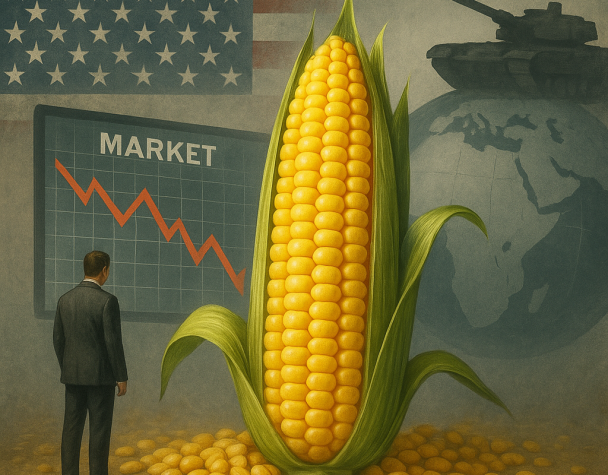
US Corn Market Faces Challenges Amid Geopolitical Tensions and Market Volatility
Sun, July 12, 2026US Corn Market Faces Challenges Amid Geopolitical Tensions and Market Volatility
The US corn market is currently navigating a complex landscape influenced by recent geopolitical events and market dynamics. As of July 10, 2026, the Teucrium Corn Fund (Ticker: CORN) is priced at $17.48, reflecting a 0.87% increase.
Impact of the 2026 Iran Conflict
On February 28, 2026, coordinated airstrikes by the United States and Israel on Iran led to immediate market reactions, particularly concerning fuel and fertilizer supply chains through the Strait of Hormuz. Subsequent weeks saw oil and fertilizer prices surge by nearly 50%, significantly affecting corn production costs. A study by the Center for Agricultural and Rural Development at Iowa State University estimates that US corn growers could face approximately $6 billion in revenue losses and $4 billion in additional costs, culminating in a $6 billion reduction in profits. The broader US economy could experience a total loss of about $13 billion related to the corn supply chain, with Iowa bearing 15-20% of these losses.
Market Volatility and Fund Liquidation
In recent weeks, the corn market has experienced heightened volatility. On June 5, 2026, corn futures declined sharply as investment funds liquidated positions, intensifying pressure on farm revenues and marketing decisions. This downturn is attributed to favorable weather forecasts, improving global crop prospects, and expanding global grain supplies, all contributing to the current market instability.
Influence of Crude Oil Prices
The relationship between crude oil prices and corn export prices is well-documented. As corn is increasingly utilized in ethanol production, fluctuations in oil prices directly impact corn demand and pricing. A rise in crude oil prices typically leads to increased demand for biofuels, thereby elevating corn prices. Conversely, a decline in oil prices can reduce ethanol demand, exerting downward pressure on corn prices.
Weather Conditions in Key Corn-Producing Regions
Weather patterns play a crucial role in corn production. For instance, Des Moines, Iowa, a significant corn-producing area, is experiencing a heatwave with temperatures reaching up to 97°F (36°C) in the coming days. Such extreme heat can adversely affect corn yields, potentially leading to reduced supply and increased prices.
Conclusion
The US corn market is currently influenced by a confluence of factors, including geopolitical tensions, market volatility, crude oil price fluctuations, and extreme weather conditions. Stakeholders must remain vigilant and adapt to these evolving challenges to navigate the complexities of the current agricultural landscape.