
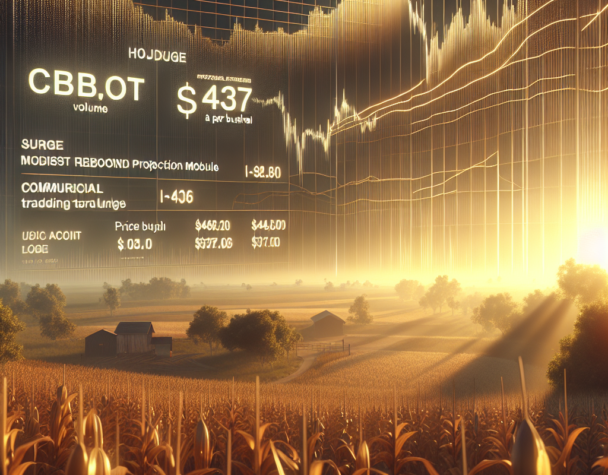
Corn Futures Volume Surge Fuels Price Rebound Jan5
Wed, January 07, 2026Introduction
Early January brought sharp activity in the corn complex: heavy trading on the Chicago Board of Trade (CBOT), a near-term price retracement, and model-driven forecasts pointing to a bounce. These concrete moves—higher volume, swings in open interest, and clear price data—offer actionable signals for traders, processors, and growers considering hedges or sales timing.
Price Action and Volume Signals
CBOT trading and open interest
On Jan. 5–6, corn futures registered above-average daily volumes, with reported session volumes in the low-to-mid 250,000s and near 269,000 contracts on the 6th. Those days also showed notable shifts in open interest, reflecting active position adjustments rather than a steady build. When volume rises sharply while open interest moves unevenly, it typically indicates heavy repositioning—speculative players and commercials both rebalancing exposure ahead of new data or liquidity events.
Recent price movement
Price data for the week ending Dec. 29 showed corn moving from roughly $4.50 to about $4.375 per bushel, with the lowest prints occurring in the first days of January (~$4.37–4.40/bu). That pullback—around 2–3% on the week—followed months of tight seasonal flows and shifting demand cues. Short-term supply sentiment remains mixed; however, model-based short-range forecasts have been updated to anticipate a modest recovery in the coming weeks.
Drivers Behind the Fluctuation
Positioning and liquidity
Large swings in trading volume suggest liquidity events and roll activity. End-of-year portfolio rebalances, speculative position unwinds, and farmer hedging around cash needs can all amplify daily volume. The recent sessions point to both opportunistic buying and profit-taking—consistent with a transitioning sentiment rather than a structural supply shock.
Forecasts and forward pricing
Short-term analytical models issued early in January project a rebound from mid-$4.30s toward the mid-$4.50s per bushel within a month, while longer-term scenario analyses remain more bullish under tighter yield or export assumptions. These are probabilistic projections—not certainties—but they matter for timing hedges and sales because they shape trader positioning.
Implications for Traders and Growers
Near-term tactics
For traders, the elevated volume and price dip create opportunities to press short-term longs ahead of the forecasted bounce, while disciplined risk controls are essential given the volatility. For growers, the recent pullback may offer a chance to forward-contract small increments of expected production rather than waiting for a full rebound.
Longer-term considerations
Investor attention should stay on export pace, biofuel demand updates, and weather forecasts for South America and the U.S. These fundamentals will determine whether the projected rebound becomes a sustained rally or a short-lived correction. Maintain staggered hedges and watch open interest trends to gauge whether institutional players are committing to new directional bets.
Conclusion
The first week of January delivered unmistakable, data-driven signals in the corn complex: high trading volume, shifting open interest, and a modest price dip followed by model-based expectations of a near-term recovery. These developments favor active, calibrated positioning—short-term traders can look for momentum plays while growers should consider phased marketing to lock in value without forfeiting upside if the rebound materializes.