
Cocoa Prices Plummet Amid Demand Slump and Supply Recovery
Sun, July 26, 2026Cocoa Prices Plummet Amid Demand Slump and Supply Recovery
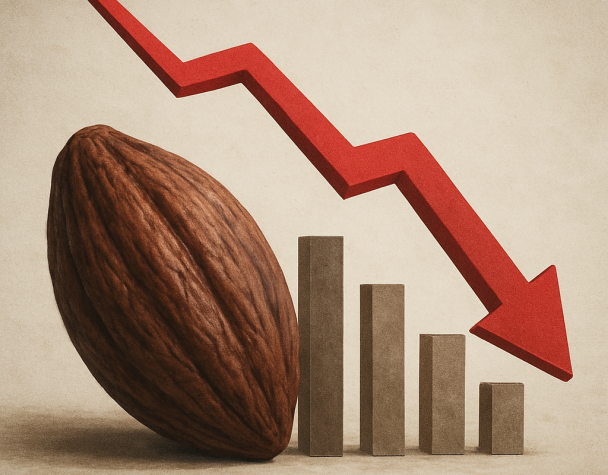
Cocoa prices have experienced a significant decline, dropping nearly 70% from their 2024 peak. This downturn is attributed to a combination of decreased global demand and a recovery in supply, particularly from West African producers.
Surge and Subsequent Decline in Cocoa Prices
In late 2024, cocoa futures reached unprecedented levels, nearing $12,900 per metric ton. This spike was primarily driven by a severe shortage of cocoa beans from West Africa, where Côte d’Ivoire and Ghana together account for over 60% of global cocoa output. The shortage was exacerbated by adverse weather conditions and agricultural challenges in these regions.
However, by early 2026, the market witnessed a sharp reversal. Cocoa prices fell to below $8,000 per metric ton, marking a nearly 70% decline from the 2024 peak. This drop was influenced by a combination of factors, including improved weather conditions leading to better harvests and a notable decrease in global demand.
Declining Demand and Its Impact
The demand for cocoa has softened significantly. Cocoa grindings—a key measure of demand—declined by 7.2% year-over-year in Europe, 16% in Asia, and 2.8% in North America during the second quarter of 2025. This decline reflects the challenges faced by manufacturers, including higher production costs and tighter profit margins. The chocolate industry, in particular, has been affected, with companies raising prices to offset increased costs, leading to reduced sales volumes.
Supply Recovery in West Africa
On the supply side, cocoa production is expected to ramp up during the 2025/2026 season. Improved weather conditions in West Africa have contributed to better crop yields. Additionally, new plantings in Ecuador reaching maturity are expected to further boost global supply. This recovery in supply, coupled with decreased demand, has exerted downward pressure on cocoa prices.
Implications for the Chocolate Industry
Despite the decline in cocoa prices, retail chocolate prices have remained high. This lag is due to several factors, including the time required for manufacturers to process and distribute products, hedging strategies that delay the impact of raw material price changes, and rising costs for other ingredients such as sugar and dairy. As a result, consumers continue to face higher prices for chocolate products, even as the cost of cocoa decreases.
Looking Ahead
While the recent downturn in cocoa prices provides some relief to manufacturers, the market remains sensitive to various factors. The concentration of cocoa production in West Africa means that any adverse weather conditions or agricultural challenges in the region could quickly impact global supply and prices. Additionally, the potential for future demand fluctuations, influenced by consumer preferences and economic conditions, adds another layer of uncertainty to the market.
In conclusion, the cocoa market is currently experiencing a period of adjustment, with prices reflecting the interplay between recovering supply and declining demand. Stakeholders across the supply chain will need to navigate these dynamics carefully to maintain stability and profitability in the industry.