
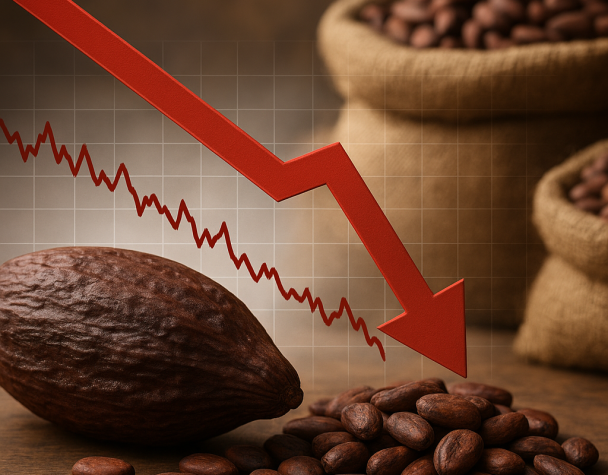
Cocoa Prices Dip to Four‑Week Low Amid Rising Exchange Stocks and Ghana Production Risks
Fri, September 18, 2026Cocoa futures have fallen to four‑week lows as supply factors weigh on prices, while weather and production risks in West Africa—in Ghana in particular—add to downward pressure.
Prices Drop to Lowest Since Mid‑August
On September 17, cocoa prices slid to $5,711 per tonne, marking their lowest level since mid‑August and reflecting a 2.6% decline over the past four weeks and a 20.3% drop year‑on‑year.
This downturn comes amid mounting evidence of abundant short‑term supply, with ICE‑monitored inventories reaching a two‑year high of approximately 3.44 million bags.
Barry Callebaut, the world’s largest cocoa processor, echoed this outlook, stating that the global supply situation is more secure than during the 2023/24 El Niño episode.
However, authorities in Ghana warned that production could fall by as much as 38%—nearly double prior estimates—pointing to disease, aging trees and pollination failures as underlying challenges.
In Ivory Coast, output is expected to decline by at least 20%, further complicating the supply outlook despite current surpluses.
Although El Niño remains a looming threat for the 2026/27 season, its potential impact appears overshadowed in the near term by immediate supply abundance and material production concerns in Ghana.
Certified Stocks Contract Slightly While Total Exchange Inventories Grow
By September 14, total licensed warehouse stocks in the U.S. had risen to 3.421 million bags, up 0.15% from earlier in the week. However, the more critical metric for delivery risk—the certified stock—saw a modest decline to 737,445 bags, representing approximately 21.6% of total U.S. warehouse holdings.
Meanwhile, in London‑based markets, valid deliverable stocks jumped sharply by 6.4%, rising to 1.423 million tonnes, with most of the increase concentrated in Antwerp.
This divergence—where total inventories grow but deliverable supplies shrink slightly in a major market—signals continuing convenience in overall supply while underscoring a nuanced balance in front‑month risk management.
Outlook: Supply Comfort vs. Weather Risk
In the short term, ample exchange inventory levels and strong arrivals suggest well‑supplied conditions. But weather developments in Côte d’Ivoire and Ghana remain closely watched. Below‑average recent rainfall raises concerns about pod development and could push the main crop toward an earlier conclusion.
Additionally, meteorological agencies are raising red flags around a potentially historically strong El Niño later this year, increasing weather‑related volatility for West African production.
What to Watch Next
- Weekly ICE warehouse inventory updates to track both total and certified stock trends.
- Ghana’s crop development reports and Cocoa Marketing Company statements on production estimates.
- Weather forecasts and seasonal rainfall trends across Ghana and Côte d’Ivoire as the main crop takes shape.
- Market supply/demand signals and any shifts in futures positioning ahead of the 2026/27 harvest season.
Despite comfort in near‑term supply, production risks and weather uncertainty in key West African origins suggest that cocoa prices remain susceptible to renewed volatility in the coming months.