
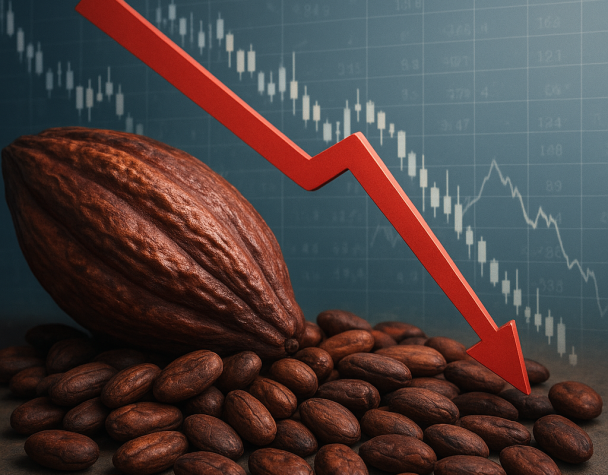
Cocoa Prices Decline Amid Rising Inventories and Market Adjustments
Tue, July 07, 2026Recent Decline in Cocoa Prices
As of July 6, 2026, cocoa prices have experienced a significant decline, with the commodity trading at $5,667 per metric tonne. This marks a substantial decrease from the record highs observed in 2024, when prices soared to over $12,000 per metric tonne. The current price reflects a 39.23% drop from the 12-month high, indicating a notable shift in the cocoa market dynamics.
Factors Contributing to the Price Decline
Increased Inventories
One of the primary factors influencing the recent decline in cocoa prices is the substantial increase in inventories. The Intercontinental Exchange (ICE) reported that cocoa inventories have reached a 1.75-year high of 3,017,796 bags as of July 4, 2026. This surge in stockpiles suggests that supply is outpacing demand, leading to downward pressure on prices.
Market Liquidation Ahead of Holidays
Another contributing factor is the pre-holiday liquidation by traders. Ahead of the U.S. market holiday, traders squared positions, leading to selling pressure across both New York and London cocoa markets. This activity resulted in a 1.10% decline in September ICE NY cocoa and a 1.86% fall in September ICE London cocoa on July 4, 2026.
Strengthening of the British Pound
The appreciation of the British pound has also played a role in the declining cocoa prices. A stronger pound reduces the value of cocoa priced in sterling, adding additional downward pressure on London-traded contracts. This currency fluctuation has further influenced the market dynamics, contributing to the recent price decline.
Impact on the Chocolate Industry
The decline in cocoa prices has significant implications for the chocolate industry. After a period of high cocoa prices, which led to the reformulation of products and the introduction of chocolate alternatives, some manufacturers are now reverting to traditional formulations. For instance, Hershey has announced plans to increase the cocoa content in its chocolate products, a move made feasible by the lower cocoa prices.
However, despite the decrease in raw material costs, retail prices for chocolate products have remained relatively high. This is partly due to hedging cycles and the need for companies to recover margins after previous cost pressures. Additionally, regulatory demands, such as the EU’s deforestation regulation set to take effect in December 2026, are expected to add compliance costs, potentially offsetting the benefits of lower cocoa prices.
Future Outlook
Looking ahead, the cocoa market is expected to continue experiencing volatility. While the current surplus has led to lower prices, factors such as political unrest and adverse weather conditions in major producing countries like Ivory Coast and Ghana could impact future supply. Moreover, the implementation of new regulations and the ongoing adjustments in the chocolate industry may influence market dynamics in the coming months.
In conclusion, the recent decline in cocoa prices is the result of increased inventories, market liquidation ahead of holidays, and currency fluctuations. While this presents opportunities for the chocolate industry to revert to traditional formulations, the overall market remains complex, with various factors likely to influence future price movements.