
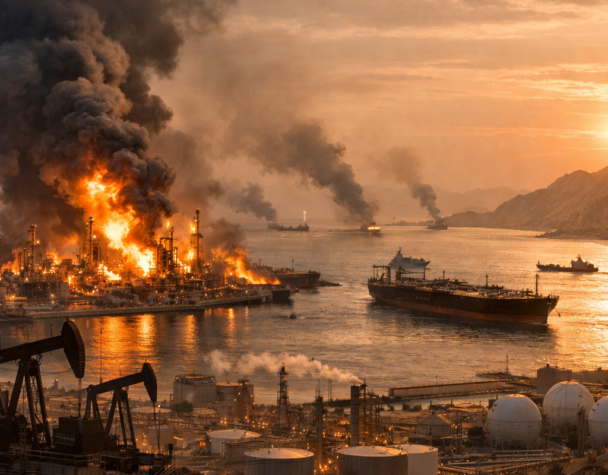
Brent Surges Past $119 After Iran Strikes, Hormuz.
Wed, March 25, 2026Introduction
This week Brent crude experienced pronounced price volatility driven by concrete supply shocks in the Persian Gulf. Renewed Iranian missile and drone strikes on oil and gas facilities, combined with persistent disruptions around the Strait of Hormuz, pushed Brent briefly above $119 per barrel and sustained a sizeable risk premium despite intermittent supply restores such as the Ras Tanura refinery restart. This article summarizes the factual developments, quantifies their immediate impact on flows and prices, and outlines practical implications for energy investors and risk managers.
Key Events That Drove Brent Prices
Iranian strikes on energy infrastructure
On March 19, coordinated missile and drone attacks targeted energy installations across the Gulf, prompting a sharp intraday jump in Brent to above $119 per barrel. These were direct physical strikes on production and processing facilities—clear, non‑speculative events that interrupt supply delivery timelines and increase near‑term availability risk.
Strait of Hormuz: chokepoint pressure
Disruptions around the Strait of Hormuz remain central. This chokepoint transits about one‑fifth of world seaborne oil and LNG; observed interruptions have a documented history of producing double‑digit percentage swings in crude prices when sustained. Because alternative routes are limited and rerouting costs are high, traders have been pricing a persistent premium into Brent.
Ras Tanura refinery restart and short-term flow relief
On March 13, Saudi Arabia’s Ras Tanura—one of the largest crude export hubs—resumed operations after an 11‑day outage following a drone attack. The restart temporarily eased immediate flow tightness and caused short-lived downward pressure on Brent. However, the relief was tactical rather than structural, and the broader risk premium from regional hostilities reasserted itself within days.
Quantifying the Impact
Price moves this week were large and rapid: Brent moved from the low‑$80s earlier in March to intermittently breach $100 on March 9 and spike above $119 on March 19. Analysts cited supply disruptions on the order of several million barrels per day in headline scenarios; while exact aggregate lost output varies by report, estimates of Iran‑linked disruptions have been referenced at levels that meaningfully tighten immediate seaborne availability.
Policy responses and strategic reserve considerations
G7 discussions included consideration of coordinated strategic petroleum reserve (SPR) releases to blunt short‑term price spikes. An SPR release can lower acute price pressure but is a finite lever that does not address ongoing chokepoint vulnerability or longer supply reduction if hostilities persist.
Implications for Investors and Operators
These developments alter the risk‑reward calculus for several participant types:
- Producers with light, sweet grades can expect higher spot realizations but must weigh insurance and security costs for exports and staff safety.
- Refiners face feedstock timing disruptions; refining margins may compress regionally if crude arrival schedules slip.
- Traders and portfolio managers should prepare for elevated realized volatility and liquidity repricing, especially in front‑month derivatives and freight contracts.
Practical hedging approaches
Given the current environment, consider these concrete strategies:
- Use option structures (puts or collars) to cap downside while preserving upside exposure to higher Brent prices.
- Employ short‑dated futures or swaps for tactical coverage because volatility and implied premium are concentrated in nearby expiries.
- Monitor tanker rates and marine insurance spreads as early indicators of sustained shipping disruption; widening spreads often precede prolonged physical flow constraints.
Conclusion
Recent concrete events—renewed Iranian strikes, ongoing Strait of Hormuz disruptions, and an intermittent Ras Tanura restart—have combined to push Brent into triple‑digit territory and sustain sharp price swings. While policy responses such as SPR releases can provide short‑term relief, the underlying chokepoint risks and geopolitical uncertainty suggest continued episodic volatility. For investors and operational stakeholders, the immediate focus should be on active position management, targeted hedging, and watching physical indicators such as export throughput, tanker rates, and repair timelines at affected facilities.