
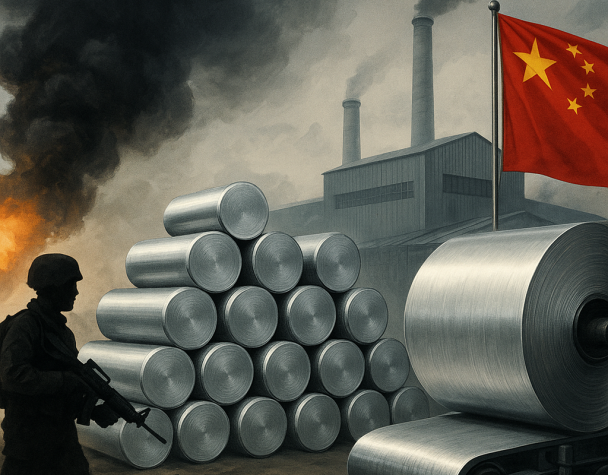
Aluminum Market Faces Supply Crisis Amid Middle East Conflict and Chinese Production Caps
Sun, August 02, 2026Aluminum Market Faces Supply Crisis Amid Middle East Conflict and Chinese Production Caps
The global aluminum market is experiencing significant disruptions due to escalating conflicts in the Middle East and stringent production caps in China. These factors have led to supply shortages and increased prices, impacting industries worldwide.
Middle East Conflict Disrupts Supply Chains
The ongoing war in Iran and associated shipping bottlenecks have triggered a historic crisis in the aluminum market. Major Gulf smelters have suffered damage, resulting in a reduction of Western production by 2.4 million tonnes within just two months. This situation has led to a surge in aluminum prices and physical premiums globally, as inventories collapse. Traders are warning of the most significant base metals supply shock since 2000, with a potential multi-million-ton market deficit. Key industries, including power grids, electric vehicles, solar energy, construction, aerospace, and packaging, are facing rising costs and shortages. The U.S. market is particularly strained due to high tariffs and declining Canadian imports. (Source: OilPrice.com, May 27, 2026)
Chinese Production Caps Tighten Supply
In addition to Middle East disruptions, China’s enforcement of a 45-million-tonne production cap is further constraining global aluminum supply. As Chinese primary output approaches this limit, the market is finding a price floor near $3,000 per metric tonne. This cap, combined with easing alumina costs, is influencing market dynamics. (Source: Rzzro, July 6, 2026)
Market Prices Reflect Supply Constraints
Aluminum prices have been volatile, with futures in the UK hovering around $3,180 per tonne. This rebound from a four-month low of $3,085 reached earlier in July is attributed to rising supply risks and tightening inventories. The intensification of attacks between the U.S. and Iran has stalled shipping traffic in the Strait of Hormuz, indicating little prospect of aluminum supplies returning from the Persian Gulf, which accounts for approximately 9% of global supply. Additionally, inventories in LME warehouses remain at their lowest levels since 2022, while Shanghai Futures Exchange stockpiles continue to decline, pointing to sustained demand. (Source: Trading Economics, June 9, 2026)
Industry Response and Outlook
In response to these challenges, the U.S. aluminum industry has invested over $11 billion in domestic operations over the past decade. This investment aims to capture next-generation growth and mitigate supply chain disruptions. The Aluminum Association emphasizes the importance of strong trade enforcement targeting non-market economies, energy policies to grow primary aluminum production, harmonized tariffs and trade monitoring within North America, and efforts to recycle and retain more aluminum domestically for U.S. manufacturers. (Source: The Aluminum Association, May 18, 2026)
As the global aluminum market navigates these supply constraints, stakeholders are closely monitoring geopolitical developments and policy changes that could influence production and trade dynamics. The industry’s ability to adapt to these challenges will be crucial in maintaining stability and meeting the growing demand for aluminum across various sectors.