
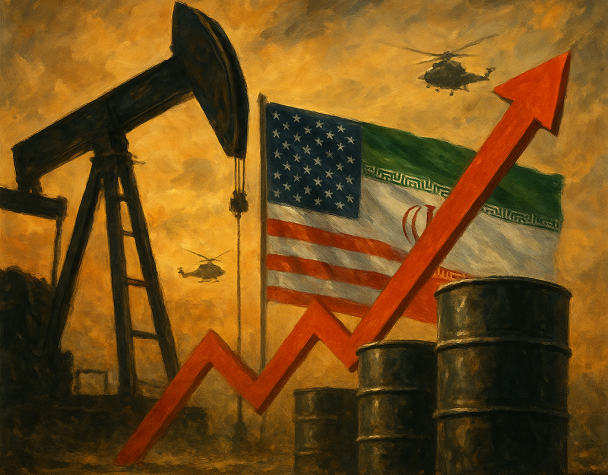
Oil Prices Surge as U.S.-Iran Military Confrontations Raise Supply Concerns
Mon, August 17, 2026Oil Prices Surge as U.S.-Iran Military Confrontations Raise Supply Concerns
In mid-July 2026, escalating military confrontations between the United States and Iran led to a significant surge in oil prices, with Brent crude surpassing $86 per barrel. This development has raised concerns about potential disruptions in global energy supplies and the broader economic implications.
Intensified Military Actions
The conflict between the U.S. and Iran intensified as both nations engaged in military strikes targeting each other’s assets. The U.S. expanded its airstrikes beyond military targets to include transportation infrastructure, while Iran continued targeting commercial tankers and issued warnings of potential escalations in the Red Sea. These actions have heightened fears of disruptions in the Strait of Hormuz, a critical chokepoint through which a significant portion of the world’s oil passes.
Market Response
In response to the escalating tensions, oil markets experienced notable volatility. Brent crude, the global oil benchmark, traded above $86 per barrel, while West Texas Intermediate (WTI) futures hovered around $80 per barrel. This represents a weekly gain of more than 13%, reflecting the market’s sensitivity to geopolitical developments in the Middle East.
Implications for Global Markets
The surge in oil prices has broader implications for the global economy. Higher energy costs can contribute to elevated inflation levels, potentially influencing central banks’ monetary policies. Investors are closely monitoring the situation, as prolonged disruptions in oil supply could have cascading effects on various industries and economic growth worldwide.
Conclusion
The recent escalation in U.S.-Iran tensions has underscored the fragility of global energy markets. As the situation continues to evolve, stakeholders across industries must remain vigilant and prepared for potential fluctuations in oil prices and their associated economic impacts.