
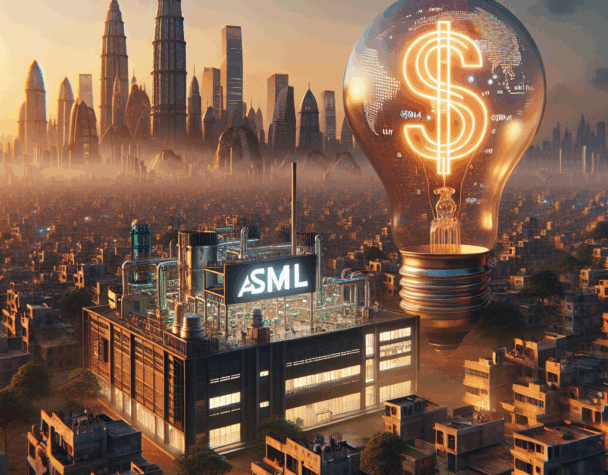
ASML Expands in India; US Backs New EUV Source Hub
Thu, December 04, 2025Introduction
Two tangible developments this week are steering investor attention toward ASML: the company’s strategic expansion of customer support into India’s GIFT City, and a U.S. government award of $150 million to xLight to develop a next‑generation EUV light source at Albany NanoTech. Both items have direct implications for ASML’s position in advanced lithography, the supply chain that supports it, and the stock’s near‑term narrative in the NASDAQ‑100.
ASML Builds Local Support in India
What the move means
ASML’s plan to open a customer support office in GIFT City, Gujarat, signals an operational shift: instead of servicing the region remotely, the company will place engineers and parts closer to customers as India attracts more fab investment. That proximity reduces turnaround times for maintenance and installations and strengthens relationships with emerging local foundries and global companies expanding manufacturing footprints there.
Why investors should care
Service revenue and uptime matter for ASML’s profitability and for customers’ ramp schedules. As semiconductor manufacturers commit billion‑dollar fabs, faster service and stronger local presence can lead to earlier purchases, quicker integrations, and recurring field service contracts — all of which support long‑term revenue visibility even if they don’t immediately change near‑term earnings guidance.
U.S. Funds xLight EUV Project at Albany NanoTech
Details of the award
The U.S. Commerce Department awarded $150 million to xLight to develop an advanced EUV light source housed at Albany NanoTech. This project supplements existing CHIPS Act commitments and state funding that have already been funneled into building out an EUV infrastructure in New York.
Implications for ASML and the EUV ecosystem
ASML remains the sole supplier of complete EUV lithography systems today, but EUV tools depend on high‑power, reliable light sources and a robust upstream supply chain. Federal investment in alternative or complementary light‑source technologies will likely broaden the ecosystem, mitigate single‑point risks, and accelerate innovation. While it doesn’t immediately erode ASML’s equipment franchise, it introduces new dynamics for component suppliers and for long‑term cost and reliability improvements in EUV operations.
Recent Financial and Analyst Signals
Analyst positioning and guidance
Recent analyst activity has been mixed: some firms raised long‑term targets reflecting confidence in High‑NA adoption and AI‑driven demand for advanced nodes, while ASML’s own cautious commentary on growth beyond 2025 has pressured sentiment. The company reported robust recent bookings and quarterly revenue in the multibillion‑euro range, but tempered guidance for 2026 triggered a short‑term share correction.
Geopolitics and export constraints
Tighter export restrictions and tariff dynamics affecting shipments to China remain a critical variable. ASML’s exposure to different regions and its need to navigate export controls can create near‑term revenue volatility even as long‑term secular drivers — AI, high‑performance computing, and advanced node migration — persist.
Practical Takeaways for Investors
Short term
Expect elevated volatility. The market is parsing soft guidance and geopolitical uncertainty against concrete positive signals like the India support hub and federal investments in EUV infrastructure. These near‑term pushes and pulls can produce outsized price moves in ASML shares within the NASDAQ‑100.
Long term
ASML’s monopoly on system‑level EUV lithography and its roadmap toward High‑NA tools keep the long‑term growth story intact. The xLight award enhances the resilience of the EUV ecosystem, and regional service investments — such as the GIFT City office — strengthen customer ties that are essential for capturing equipment and recurring service revenue as new fabs come online globally.
Conclusion
This week’s developments are concrete and actionable rather than speculative: ASML is physically beefing up its global support footprint in India, while the U.S. is financing upstream EUV innovation at Albany NanoTech. Together these moves clarify two parallel trends — immediate operational tightening with customers, and ecosystem strengthening that reduces long‑term technical risk. For investors in the NASDAQ‑100 component, the result is a nuanced picture: near‑term sensitivity to guidance and geopolitics, paired with structural upside tied to continued EUV adoption and High‑NA progress.